Zirconium Dental Crowns Ankara
With zirconium dental crown treatment in Ankara, you can achieve a smile that sacrifices neither natural appearance nor long-term durability. In this article, as dentists at EOT Clinic Ankara Oral and Dental Health Polyclinic, we cover zirconium teeth and crowns in full and answer the questions you may have before your treatment in Ankara.
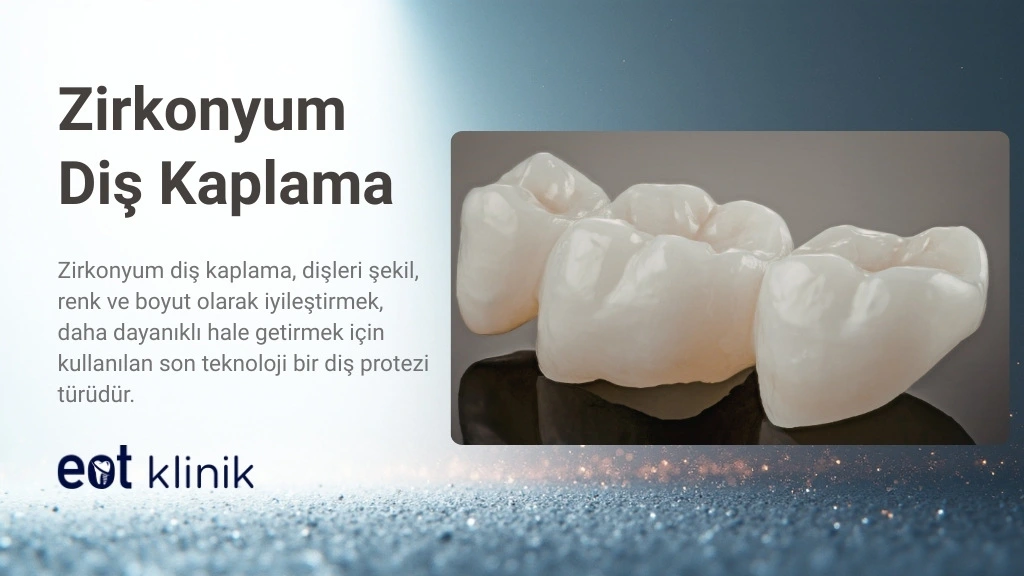
What is a zirconium dental crown?
Zirconium dental crowns are a state-of-the-art type of dental prosthesis used to improve teeth in shape, colour, and size while making them more durable. They take their name from zirconia, a strong metal used in many industries from aerospace to medicine. The zirconium used in dentistry is processed into ceramic zirconium, which differs from its pure form. This produces a metal-free substructure material with high biocompatibility and excellent aesthetics.
How are zirconium crowns made?
Zirconium crowns are manufactured using computer-aided design and manufacturing (CAD/CAM) technology. In this system, a digital impression of the prepared tooth is taken and transferred to a computer. The crown designed by dental technicians in software is then milled with high precision from a block of zirconium on computer-controlled machines (CNC). This digital process ensures a perfect fit and maximum natural appearance. The zirconium substructure is then coated with special porcelain to achieve aesthetic appearance and natural tooth shine. For this reason they are often called “zirconium-supported porcelain crowns.”
Features of zirconium dental crowns
The features that set zirconium dental crowns apart from other crown types are:
High strength:
Zirconium is one of the strongest dental restoration materials known. It is highly resistant to the heavy chewing forces on posterior (molar) teeth and offers superior performance against fracture and cracking.
Superior aesthetics:
One of zirconium’s greatest advantages is that it reflects light similarly to natural teeth and has a semi-translucent structure. It eliminates the dull, opaque look of metal-supported porcelain crowns, giving teeth a lively, deep appearance. There is no dark metal line at the gum margin, which keeps aesthetics fully natural.
Excellent biocompatibility:
Zirconium is among the materials least likely to be rejected by the body. The risk of allergic reaction is almost nil, and it integrates very well with gum tissue. Thanks to this, the risk of gum recession and inflammation is minimised.
Thermal insulation:
Metal crowns can conduct heat when eating hot or cold foods and cause sensitivity. Zirconium acts as a thermal insulator similar to natural teeth, which greatly reduces hot/cold sensitivity.
Lightweight:
Compared with other metal alloys, it is a lighter material, creating a more natural, comfortable feel in the mouth.
What are the advantages of zirconium crowns?
As a natural consequence of the features above, zirconium crowns offer many benefits to patients and dentists:
Natural appearance:
Thanks to light transmission, it is the material that best mimics natural tooth enamel. It is the first choice especially on front teeth where aesthetic concerns are highest.
Exceptional durability:
It has durability equal to or greater than metal-supported crowns. It is a long-lasting restoration solution.
Healthy gum compatibility:
With no metal at the gum line and strong biocompatibility, it supports gum health. Unwanted darkening or purpling at the gum margin does not occur.
No allergy risk:
It can be chosen safely for people allergic to metals such as nickel and chromium.
Minimal tooth reduction:
Zirconium’s high strength allows a thinner crown. Therefore less tooth structure needs to be reduced than with metal-supported crowns; more healthy tooth tissue is preserved.
Colour stability:
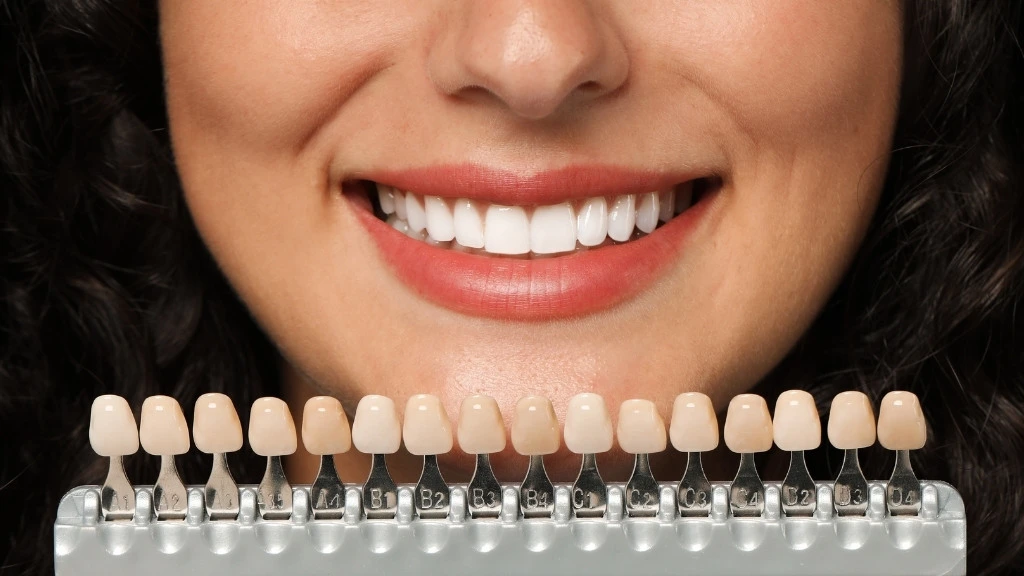
The zirconium substructure and porcelain on top do not change colour, yellow, or stain over time. They are unaffected by coffee, tea, smoking, and similar factors, maintaining their original whiteness for many years.
How is zirconium dental crown treatment performed?
The zirconium dental crown treatment process involves not only the dentist but also the dental technician and the latest technology. The treatment consists of the following stages:
Initial examination, diagnosis, and comprehensive planning
This is one of the most critical stages of treatment. Here the question is not only “will the tooth be crowned?” but also “how and with what planning will it be done?”
Clinical examination:
Your dentist examines each tooth, your gum health, existing fillings, and decay in detail. Whether your gums are healthy enough to support the crown margin is checked.
Radiographic imaging:
X-rays are always taken to detect problems not visible in the mouth. With these images, root condition, bone level, hidden decay, and the status of previous root canal treatments are assessed. If a bridge is planned, the strength of abutment teeth is clarified on radiographs.
Aesthetic planning:
This stage personalises treatment. Your dentist listens to your aesthetic expectations. Photos may be taken or methods such as digital smile design may be used to simulate the outcome. Which teeth will be crowned and their ideal form, size, and colour are decided together. This is the guarantee of achieving the smile you envision.
Preparing the teeth
This stage is performed under local anaesthesia and is completely painless.
Anaesthesia: The tooth and surrounding tissues are fully numbed.
Amount of reduction: Zirconium’s high strength allows a very thin crown. Therefore the amount removed from the teeth (0.5–1.5 mm) is much less than with metal-supported porcelain crowns. The aim is to preserve as much sound tooth structure as possible (“minimally invasive approach”).
Special angles: The tooth is reduced in a specific form so the crown locks mechanically. This is done with a preparation technique that prevents the crown from coming loose and creates an ideal margin for gum health.
Taking impressions: conventional and digital methods
Conventional impression:
A physical mould of the prepared teeth and opposing jaw is taken using impression material (usually silicone-based). This mould is sent to the laboratory where a plaster model is poured.
Digital impression (intraoral scanner):
Today this is the most modern preferred method. The dentist passes a probe with a laser or light source over the teeth. The device creates a three-dimensional digital model of the teeth and surrounding soft tissues with millimetric accuracy. Advantages include:
- Very low error rate: There is no risk of impression material shrinking or being defective in the mouth.
- Fast and comfortable: It minimises the gag reflex in patients.
- Instant data transfer: Digital data can be sent to the laboratory online immediately, speeding up the process.
Making temporary crowns:
Temporary crowns serve many vital functions, not only aesthetics:
- Protection: They protect prepared, sensitive teeth from hot/cold, chewing forces, and bacteria.
- Aesthetics: Especially in the front area, they provide a natural look during treatment so patients can continue social life comfortably.
- Gum health: They help gums shape healthily and achieve a perfect fit at the crown margin.
- Function: They maintain chewing function.
Design and production with CAD/CAM technology:
This stage takes place in the dental laboratory.
CAD (computer-aided design):
The model from digital or physical impressions is loaded into special software. The dental technician designs the crown virtually using this software.
In this design:
- The ideal anatomical form of the tooth is created.
- The relationship of chewing surfaces with opposing teeth (occlusion) is adjusted perfectly.
- Contact points with adjacent teeth are defined.
- A margin compatible with the gums and easy to clean is created.
CAM (computer-aided manufacturing):
This virtual design is sent to a milling machine (CNC). The machine, with high-speed rotating diamond burs, mills a pre-sintered (densified), very hard zirconium oxide block according to the design with millimetric accuracy. This produces the “zirconium substructure.”
Porcelain layering and firing:
This white zirconium substructure is layered by hand with special dental porcelains that mimic natural enamel to achieve a lively, deep appearance. Each layer is fired in high-temperature vacuum furnaces to bond with the zirconium substructure. This layering creates colour transitions and light reflections so the crown becomes virtually indistinguishable from a natural tooth.
Final check and permanent cementation
Permanent crowns arrive from the laboratory and the final stage begins.
Trial of zirconium crowns:
Temporary crowns are removed and the teeth are cleaned. Zirconium crowns are placed on the teeth.
Comprehensive check:
Your dentist checks the crowns in detail for:
- Fit: Whether they seat fully on the tooth.
- Colour: Match with the colour decided beforehand.
- Shape: Conformity to the designed form.
- Occlusion (bite): The patient is asked to open and close the mouth; whether the crown interferes with the bite and whether there are high pressure points on the crown is checked. Adjustment is made if needed.
- Patient approval: The patient is shown the result in a mirror and the crowns are presented for approval.
Permanent cementation:
When everything is satisfactory, cementation begins.
Surface preparation: The tooth surface and inner surface of the crown undergo special micro-roughening so the cement bonds strongly, and they are disinfected.
Cement application: A permanent, biocompatible, coloured dental cement is applied inside the crown.
Placement and fixation: The crown is placed exactly on the tooth and pressed lightly.
Removing excess: Excess cement at the gum margin is cleaned carefully. This is very important for gum health.
Light curing: A special light device is used for the cement to polymerise (harden) fully.
How do you care for teeth after zirconium crowns?
Good care is essential to extend the life of zirconium crowns and protect your oral health. This care is almost the same as for natural teeth:
Regular, correct brushing
Brush at least twice daily with a soft-bristled toothbrush and fluoride toothpaste. Pay attention to the gum–tooth junction and the margin where the crown meets the tooth.
Using dental floss
Daily flossing is vital to remove plaque between crowns. This is very important for gum health and the long life of your crowns.
Interdental brushes:
For people with wider gaps between teeth, interdental brushes also provide effective cleaning.
Regular dental check-ups:
Visit your dentist every six months to check your crowns and have professional cleaning.
Dietary habits:
Although zirconium crowns resist staining, it helps to avoid or rinse after highly staining foods and drinks (tea, coffee, red wine, smoking) when possible. Also avoid cracking hard nuts, ice, or olive pits with your teeth.
Who is zirconium crown treatment suitable for?
Zirconium crowns are a suitable treatment option for a wide range of patients:
Those with aesthetic concerns on front teeth: An ideal solution for front teeth with colour, shape, or alignment problems.
People with metal allergy: Patients who cannot use traditional metal-supported crowns.
Those who want posterior (molar) teeth crowned: Can be used safely on back teeth due to resistance to high chewing forces.
Those with fractured or heavily damaged teeth: To protect and restore teeth that cannot be restored with fillings.
Those with root canal treated teeth: To strengthen teeth that have had root canal treatment and are at high risk of fracture.
Those having a bridge: Zirconium can also be chosen for bridges to replace missing teeth.
Who is zirconium crown treatment not suitable for?
In the following situations, zirconium crowns may not be applied or additional treatment may be required first:
Poor oral hygiene: If the patient does not maintain oral care regularly, crown life will shorten and gum problems will occur.
Severe teeth grinding or clenching (bruxism): This can cause excessive stress and fractures on crowns. Patients with bruxism are advised to have a night guard made before treatment.
Insufficient tooth structure: There must be enough sound tooth structure for the crown to hold. On very short or heavily worn teeth, additional prosthetic methods may be needed.
Uncontrolled gum disease: If there is active gum inflammation (gingivitis) or periodontitis, these gum diseases must be treated first.
How long does zirconium dental crown treatment take?
Total treatment time varies depending on the number of teeth crowned, laboratory workload, and whether additional treatment is needed. Therefore, treatment for a single tooth is usually completed within 5 to 10 days. For multiple teeth or full-mouth (smile design) treatments, this can extend to 2–3 weeks. Generally, for a single tooth the average timeline is:
First appointment (examination and planning): 30–60 minutes.
Second appointment (tooth preparation, impressions, temporary crowns): 60–90 minutes.
Laboratory time: 3 to 7 business days.
Final appointment (cementing crowns): 30–60 minutes.
What are the differences between zirconium and metal-supported porcelain?
Feature | Zirconium crown | Metal-supported porcelain crown |
Substructure | Ceramic zirconium (metal-free) | Metal alloys such as nickel-chromium, cobalt-chromium |
Aesthetics | Very high. High light transmission and natural look. No metal line at the gum. | Moderate. Low light transmission, dull appearance. Dark line at the gum over time. |
Durability | Very high. Highly resistant to fracture and wear. | High. Not fragile but not as strong as zirconium. |
Biocompatibility | Excellent. Allergy risk almost none. | Low. Allergy and sensitivity to contained metals may develop. |
Tooth preparation | Less tooth structure is reduced. | More tooth structure is reduced. |
Thermal insulation | Good. Hot/cold sensitivity is rare. | Poor. Metal conducts heat; sensitivity may occur. |
Cost | Higher. | More economical. |
Zirconium dental crown prices in Ankara
Zirconium dental crown prices in Ankara can vary widely depending on whether treatment is for one tooth or more. The wide price range depends on many factors listed below.
All dental treatments offered at our clinic are determined based on the Turkish Dental Association (TDB) 2026 Oral and Dental Health Examination and Treatment Fee Schedule. You can click the link for information on zirconium dental crown prices. Zirconium tooth prices in Ankara may vary according to each patient’s individual situation, scope of treatment needed, materials used, and additional procedures in the process. For an exact price, you can have an examination and get detailed information by contacting EOT Clinic Ankara Oral and Dental Health Polyclinic.
Factors affecting zirconium dental crown prices
Clinic and dentist experience: Prices may be higher at centres with renowned or specialist dentists and strong technological infrastructure. However, this also indicates quality and assurance.
Laboratory quality: The quality of the dental laboratory that designs and produces the crowns, and the brands of zirconium blocks and porcelains used, directly affect price. Laboratories using imported materials have higher costs.
Complexity of the case: The number of teeth and complexity of the case (e.g. bridge construction, crown on implant) can increase the price.
Additional treatments: If procedures such as root canal treatment, gum treatment, or bone grafting are needed before zirconium crowns, total cost will reflect that.
Warranty period: The warranty period clinics offer on treatment also plays a role in pricing.
Exchange rates: Because imported materials are used, changes in currency rates can affect prices.
Frequently Asked Questions
Is zirconium dental crown treatment painful?
No. Because the procedure is performed under local anaesthesia, you will not feel pain or discomfort during tooth preparation and impression taking. After the anaesthetic wears off, mild tenderness or sensitivity may occur; this is normal and passes within a few days. Pain relievers recommended by your dentist can manage this period comfortably.
How long does zirconium dental crown treatment take?
Clinical procedures for a single tooth (preparation and cementation) usually take less than an hour each. Including the laboratory stage, total treatment time is on average about 5–10 days.
How long do zirconium crowns last?
With quality materials, correct application, and regular oral care, a zirconium crown can last 10 to 15 years or even longer. This period may vary depending on oral hygiene habits, teeth grinding, and diet.
Will a zirconium tooth feel like my own tooth?
Yes, it is the crown type closest to your natural tooth in both appearance and feel. Thanks to light transmission, colour match, and excellent gum compatibility, it is almost impossible to tell them apart from your natural teeth when viewed from outside.
Does a zirconium crown harm my natural tooth?
No, when applied correctly it does not harm your natural tooth. On the contrary, it protects a fractured or decayed tooth from external factors and extends its life. However, preparation for the crown means loss of part of the enamel layer, which is unavoidable for all crown types.
Can a zirconium tooth break?
Zirconium is one of the most durable materials used in dentistry, and fracture under normal chewing forces is almost impossible. However, in people who grind their teeth (bruxism) or when very hard objects (ice, hard-shelled nuts) are cracked with the teeth, small cracks or fractures may rarely occur in the porcelain layer on top. Fracture of the zirconium substructure itself is very rare.